What to Look for When You Hire Someone to Handle Your Website
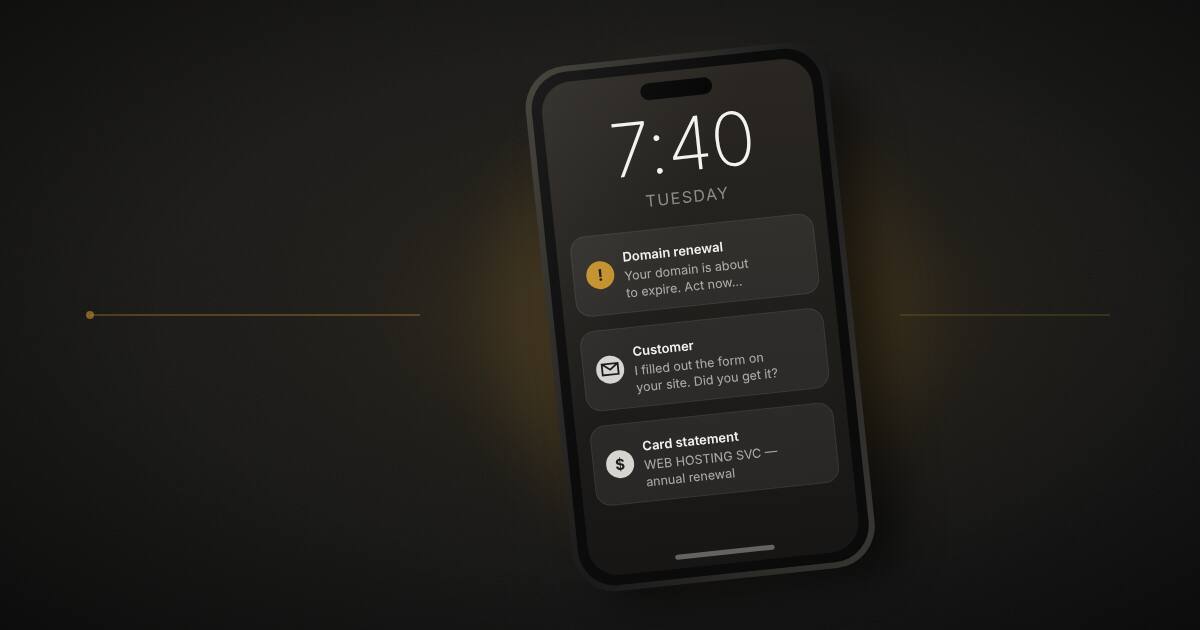
It's 7:40 on a Tuesday night. You just got home from a long job and finally open your email.
One message says your domain name is "about to expire." You can't tell if it's real or a scam. Below it is a note from a customer: "I filled out the form on your website last week. Did you get it?"
You didn't.
Now the questions start. Who set up that form? Was it your nephew, or the company that sold you an ad package a few years ago? There's a hosting charge on your credit card every year, but what does it pay for? And if something is broken, who do you call?
This happens to a lot of good business owners. It isn't carelessness. You're busy doing the work your customers pay you for.
If you're thinking about handing your website to someone else, here's how to pick a partner who takes the problem off your plate instead of handing you a new one.
Handling your website means more than a new homepage
A lot of web companies focus on how a site looks. Looks do matter. People size up a business by its website, the same way they size up a work truck or a storefront.
But a fresh homepage won't answer the questions in that Tuesday-night inbox. Real small business website management means one person or company is responsible for the whole job, not just the paint.
That should cover:
- Ownership. You know who owns your domain name, your website, your words and photos, and your Google listing. (It should be you.)
- Updates. Most websites run on software that needs regular updates, like the apps on your phone. Skipping them leads to trouble.
- Security. Someone keeps an eye out for break-in attempts and spam.
- Backups. A backup is a saved copy of your whole site. If something goes wrong, the site can be put back.
- Hosting. Hosting is the rented space on a computer where your website lives. Your partner should provide it or explain what you're paying for.
- Ways to reach you. Forms, phone links, and appointment requests get tested so messages actually arrive.
- Tracking. A simple count of the calls and form requests your website brings in.
- Small content changes. Help updating hours, services, photos, and seasonal notes.
- A local plan. Steps to help nearby customers find you on Google and Google Maps.
If a company only talks about colors, fonts, and photos, they're selling a redesign. That can be worth buying. It just isn't the same as someone handling your website.
What a good website partner should handle
It breaks down into four jobs.
1. Keep the site healthy
Your site should load quickly, work well on a phone, and stay secure. Website maintenance for a small business should happen on a schedule, not only after something breaks. That means updates, security checks, backups, and a regular look to catch anything that quietly stopped working.
2. Keep you reachable
Many owners never check this part. A contact form can stop sending messages, and nobody notices until a customer mentions it. A good partner tests your forms, makes your phone number tap-to-call on a cell phone, and puts the next step on every page. "Call now," "Request a quote," or "Book an appointment" should never be hard to find.
3. Help local customers find you
Your site should say plainly what you do and where you do it. A partner who understands local search and Google Maps will build pages for your main services and the towns you serve. They'll also make sure your website and Google Business Profile give the same information.
4. Keep you in the loop
You shouldn't have to learn new software. A short update now and then is enough: what was fixed, how many calls and form requests came in, and whether anything needs your attention.
Questions to ask before you hire someone
Take these to any company you're considering. Straight answers are a good sign. Fuzzy answers are worth noticing.
- Who owns the domain name, website files, content, and Google Business Profile? You should. Your partner can manage them, but the accounts should be in your business's name.
- What's included each month? Ask for it in writing. "Maintenance" means different things at different companies. (Here's how my plans and pricing break it down.)
- How do you handle updates, security, and backups? Ask how often each one happens and how they'd restore a broken site.
- How fast do you respond when the site, a form, or a phone link stops working? For a service business, a broken contact form is urgent. Ask for an answer in hours or days.
- How will you help more local customers find us? Listen for specifics: service pages, town-by-town pages, matching business details, and your Google listing.
- Will you set up and help manage our Google Business Profile? That means a complete, accurate listing with good photos, correct hours, and the right business categories.
- How will you measure results? Look for calls, form requests, appointment requests, and requests for directions. Website visits alone don't pay the bills.
- Will the site clearly explain our services and the areas we serve? A visitor should know right away what you do and whether you work in their town.
- Can you show me local businesses you've helped? Ask to see real sites and what changed after the work.
- Are the costs, commitments, and cancellation terms clear? Know the setup cost, the monthly cost, how long you're committed, and what you keep if you leave.
Why local SEO matters more than broad traffic
Picture a plumbing company in Cedar Rapids, Iowa. Visitors from Texas and Oregon won't help it. They can't hire it. What it needs is the homeowner across town with a leaking water heater, searching on a phone and ready to call today.
That's what local SEO is for. SEO stands for "search engine optimization." Local SEO is the ongoing work of helping nearby customers, and Google, understand what you do, where you do it, and why you can be trusted.
It usually includes:
- Service pages. A separate page for each main service, instead of one page that lists everything.
- Matching business details. Your name, address, phone number, and hours should be the same everywhere they appear online.
- Local details. Your site names the towns and neighborhoods you actually serve.
- Phone-friendly pages. Lots of people search for local help on their phones. Your site should be easy to read and tap on a small screen.
- Your Google Business Profile. This is the listing that can show up in Google Maps and local results. For many local businesses, it deserves as much care as the website.
- Reviews. Honest reviews from real customers help people choose you. Replying to them shows you care.
- Easy contact. Someone who's ready should be able to call or request service in a tap or two.
To be honest about it: local SEO takes time. No one can promise you the top spot on Google, so be careful with anyone who does. A website isn't your whole marketing plan, either. Good work, word of mouth, and reviews still carry a lot of weight. What a good partner can do is clear away the things that keep local customers from finding you and getting in touch.
Warning signs
Be careful if a website company:
- Won't give a straight answer about ownership. If your domain or Google listing is in their name, leaving can get messy.
- Sends reports you can't follow. Pages of charts that never mention calls or form requests don't tell you much.
- Keeps your site on a system you can't take with you. Some setups make moving your website difficult or impossible.
- Is hard to reach. If they're slow to reply before you sign, it rarely improves after.
- Only talks about design. A good-looking site that doesn't bring in calls isn't doing its job.
- Has no plan for local search. If they can't explain how nearby customers will find you, ask why.
- Guarantees rankings. No one controls Google. A promise of "page one" or "number one" is a red flag.
Checklist for comparing providers
Use this when you talk with two or three companies:
- I'll own my domain, website, content, and Google Business Profile
- I have a written list of what's included each month
- Updates, security checks, and backups happen on a schedule
- I know how fast they'll respond to a broken form or website
- They explained their local search plan in words I understood
- They'll help with my Google Business Profile
- They'll track calls and form requests, not just visits
- My services and service areas will be easy to find on the site
- They showed me real local businesses they've helped
- Costs, commitment, and cancellation terms are in writing
Let's talk about your website
I'm Lyn, and Designing Results is my business. I build and look after websites for trade and service businesses around North Liberty, Cedar Rapids, and Iowa City. The plans are spelled out, so there's no guessing what you're paying for. The goal is simple: your website should make it easy for nearby people to call you, request service, or see what to do next.
If you're not sure what shape your current site is in, I'm glad to take a look. We can talk about your website, the customers and towns you want to reach, and what you'd like off your plate. No pressure and no sales pitch.
Tell me what's going on with your site